1-3/4" Sucker rod Coupling API 11AX
Upgrade your oilfield equipment with our API 11AX compliant Sucker Rod Coupling. Measuring 1-3/4", it is engineered for durability and seamless performance, maximizing your operations’ productivity.
- Brand: Henan Sunjoy
- SKU: 1280
- Shipping:
- Return Policy: <div class="return-policy"> <h2>No-Risk Return Policy</h2> <p>Not 100% satisfied? We make returns easy.</p> <div class="highlight-box"> <h3>🔄 30-Day Returns</h3> <p>Return any item in original condition within 30 days for a full refund.</p> </div> <h3>📦 How to Return:</h3> <ol> <li><strong>Contact us</strong> at returns@yourstore.com with your order number</li> <li><strong>Get approval</strong> + return shipping label (if applicable)</li> <li><strong>Ship back</strong> via prepaid method</li> </ol> <h3>❗ Important Notes:</h3> <ul> <li>Refunds exclude original shipping fees</li> <li>Customs duties on international returns are non-refundable</li> <li>Final sale items marked "Non-returnable" are excluded</li> </ul> <p>🔔 <em>Need help? Chat live with our support team → [右下角聊天图标]</em></p> </div>
Learn More
1-3/4" Sucker rod Coupling API 11AX
The sucker rod coupling is a critical connecting component used to join two sucker rods, installed at both ends of the rod and connected via threaded engagement. It plays a key role in the pumping system by:
Transmitting mechanical loads (tension, compression, and torsional forces)
Ensuring thread sealing (preventing well fluid ingress)
Enhancing fatigue resistance
Facilitating disassembly and maintenance
Couplings are typically fixed to the sucker rod body through interference fit or cold-upsetting process, with some designs being removable.
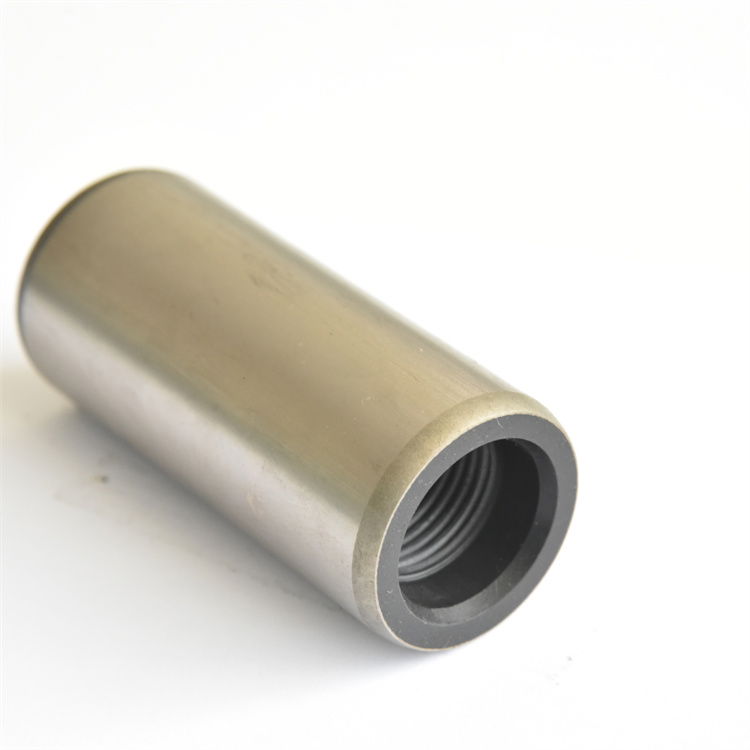
1. Structural Features and Material Requirements
Item | Description |
Structure | Cylindrical metal sleeve with internal threads; outer surface often features wrench flats or hexagonal sections for installation |
Connection Type | External threads on sucker rod + internal threads in coupling (commonly conical threads, e.g., API 8-Round Thread) |
Common Materials | High-quality alloy steels (e.g., 35CrMo, 40Cr, 42CrMo), quenched and tempered |
Surface Treatment | Zinc plating, phosphating, or anti-corrosion coating to enhance durability |
Standards | Compliant with API SPEC 11B “Pump Plunger, Pump Rods, and Accessories” |
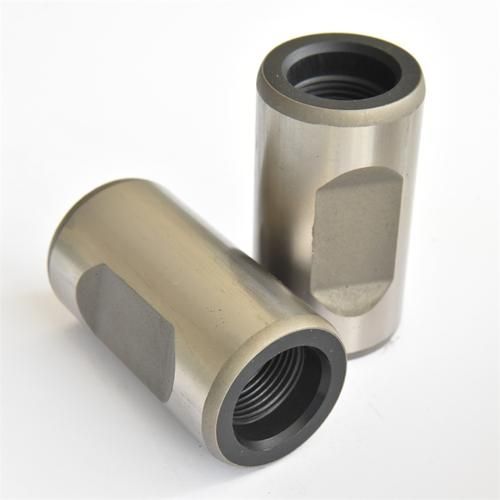
2. Common Types of Couplings
Type | Features | Application |
Standard Coupling | Standard dimensions, compatible with D- and K-grade sucker rods | Shallow to medium-depth wells, general-purpose use |
High-Strength Coupling | Higher material strength (e.g., for H-grade rods) | Deep wells or high-load conditions |
Anti-Backoff Coupling | Equipped with locking mechanism (e.g., lock ring) | Deviated or eccentrically worn wells prone to thread disengagement |
Short Coupling | Reduced length, lighter weight | Space-constrained or weight- sensitive downhole operations |
Special Thread Coupling | e.g., Improved Fine Hard Thread (IFHT), double-seal threads | High-pressure or high-sealing requirement wells |
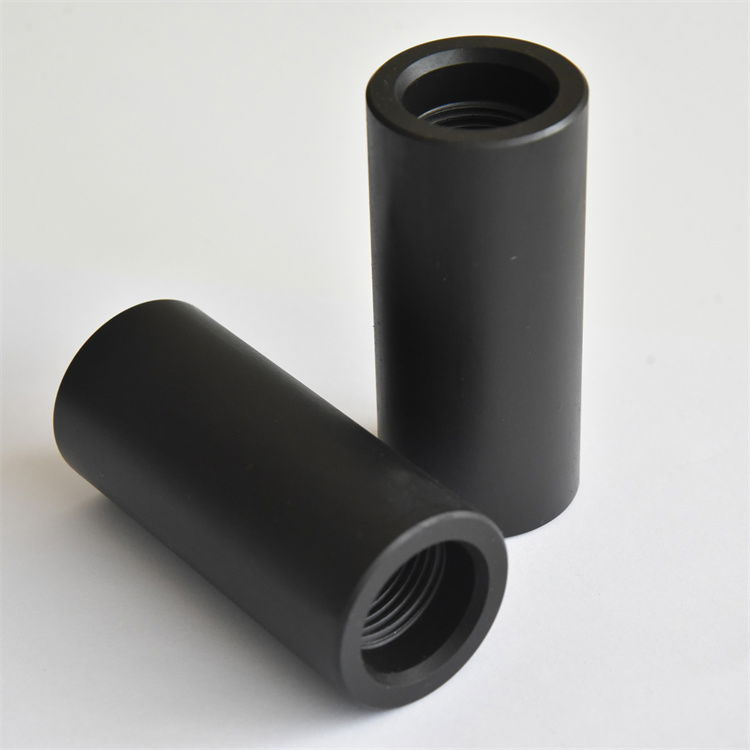
3. Key Parameter Table (Typical Specifications)
Parameter | Common Values / Notes |
Applicable Rod Diameter (mm) | 16, 19, 22, 25, 29, 32 |
Outside Diameter (mm) | 38, 42, 48, 54, 62, 68 (increases with rod diameter) |
Length (mm) | 80 ~ 120 (standard); short type: 60 ~ 80 |
Thread Type | API 8-Round (most common), ACME, Modified Buttress |
Taper | 1:16 (diameter changes by 1 mm per 16 mm length) |
Pitch (mm) | 2.309 (API 8-Round, 6 threads per inch) |
Minimum Tensile Strength (MPa) | ≥900 (standard grade); ≥1100 (high-strength) |
Hardness (HRC) | 25~35 (after tempering) |
Make-up Torque (N·m) | Ranges from 300 to 900 N·m depending on diameter |
Sealing Method | Thread sealant + metal-to-metal initial seal (not primary seal) |
Applicable Standard | API SPEC 11B, SY/T 5029 “Sucker Rods and Their Couplings” |
4. Selection Guidelines and Precautions
Compatibility Principle
The coupling must exactly match the rod diameter, thread type, and grade; mixing types may lead to premature failure.
Corrosion Resistance
In H₂S-containing or high-salinity environments, use sulfide stress cracking (SSC)-resistant materials such as 35CrMoA with dehydrogenation treatment.
Field Maintenance
Inspect thread wear and deformation after each disassembly
Use dedicated thread compound (e.g., API 5A3 compliant) for lubrication and sealing
Avoid using pipe wrenches directly on the coupling body to prevent damage
Quality Control Points
Dimensional tolerance (±0.1 mm)
Thread pitch diameter consistency
Uniformity of heat treatment (microstructure inspection required)
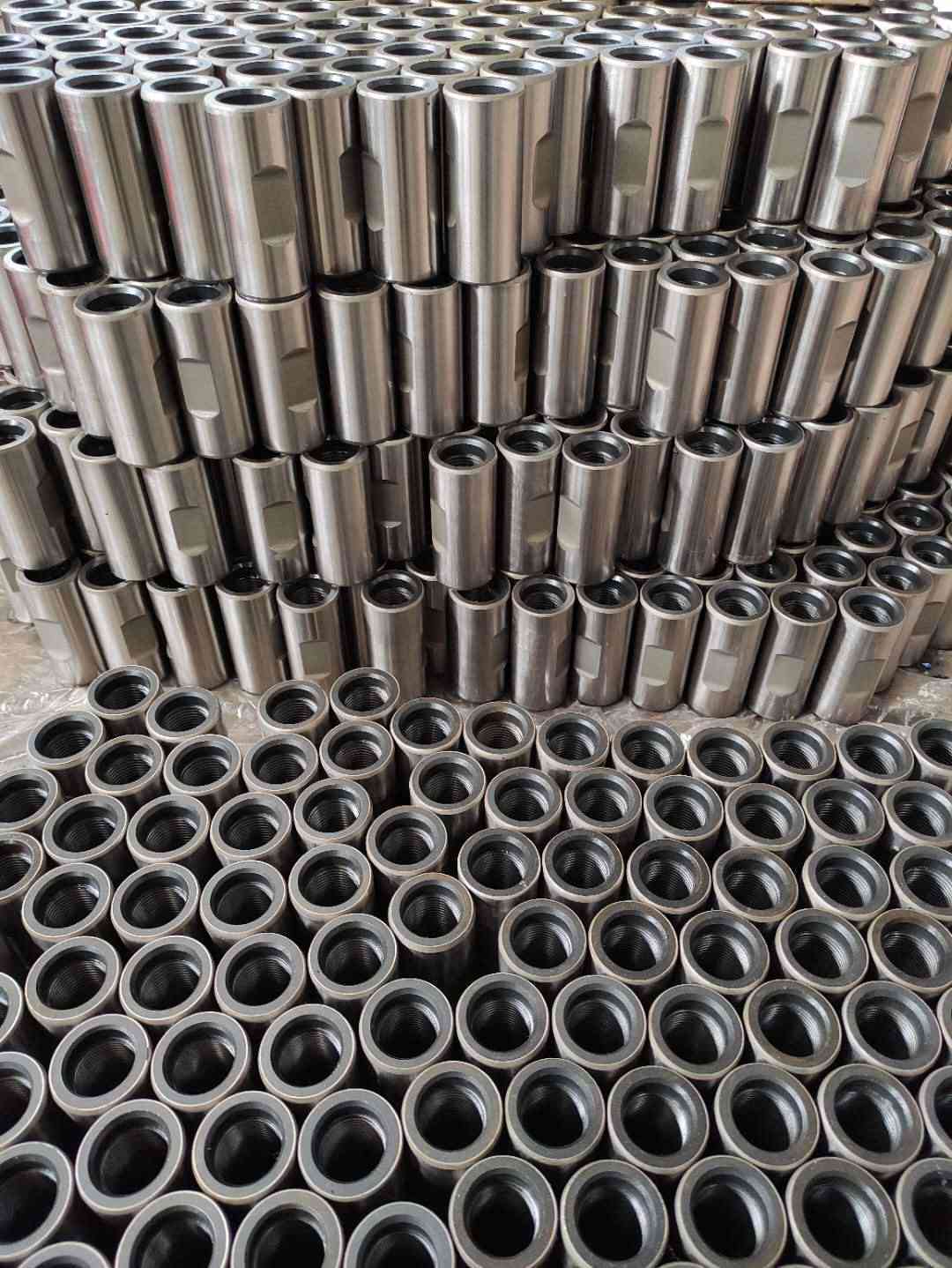
5. Suggested Supplementary Documentation
If you are building a comprehensive technical archive for downhole pumping equipment, consider collecting the following related components:
Sucker rod body specifications (grade, length, weight)
Polished rod and stuffing box interface standards
Sucker rod centralizer placement strategy
Sucker rod anti-parting device selection guide